The selection of the 83rd Mostra Internazionale d'Arte Cinematografica di Venezia is “the most political one in recent years”, at least according to artistic director Alberto Barbera, who also announced that “neither the Biennale nor the festival will make political declarations in order to take sides.” So what kind of politics are those exactly, that loudly and proudly announce themselves while carefully shying away from any clear commitment? Economic politics, apparently. Commercial pragmatism, laced with a dash of conservatism and patriarchalism which have always had their place at the Venice Film Festival. Its current edition, running from September 2nd to 12th, tries to make a virtue out of necessity by presenting the palpable absence of the usual star crowds and blockbuster productions as topical intention.
Barbera’s announcement of these almost read like a disclaimer: “There are several films that can start controversies or, at the very least, provoke very strong political reactions.” Among them is Naza by Israeli directors Yuval Abraham and Rachel Szor, promoted to competition after winning an Oscar for their harrowing documentary No Other Land. Julia Loktev continues her chronicle of Russia’s persecution of independent journalists with My Undesirable Friends Part II — Exile, premiering out of competition. Another Oscar Winner and prominent documentarist, Laura Poitras uncovers ICE's brutal deportations in They’re Here, which she aptly describes as a “horror film”. Then there are those from the other end of the political spectrum that already sparked these “strong reactions” by Ukraine’s Foreign Ministry, Culture Ministry and its Italian embassy.
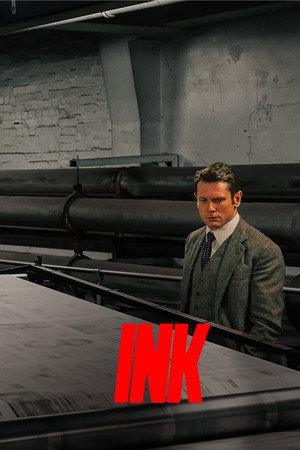
They formally complained about the competition inclusion of Ilya Khrzhanovsky's historical drama DAU about life in Ukraine during Soviet times, starring Teodor Currentzis who never condemned Russia’s invasion. Less controversial and more broadly toying with the sensationalism that at least one of them exposes, are Alex Gibney's monumental Musk, Danny Boyle’s yellow press anthem Ink, and Lance Oppenheim's Primetime. The first is a four-hour documentary on the totalitarian tech bro and former US public official. The second dramatizes Rupert Mordoch’s transformation of The Sun into a leading populist publication, while the third is a fictional take on the discontinued real-life TV series exposing pedophiles, To Catch a Predator, with Robert Pattinson starring as the show’s host Chris Hansen.
Pattinson is one of the relatively few major star guests, beside Venice regular George Clooney. The latter is grabbing a lifetime achievement award alongside screen icon Ellen Burstyn. Javier Bardem and Penélope Cruz will grace the premiere of Florian Zeller’s psychological thriller Bunker, about an architect and his wife involved in an Elon-Musk-like billionaire’s bunker project. Martin McDonagh’s Wild Horse Nine has Sam Rockwell and John Malkovich looking forward to the Pinochet coup, while Werner Herzog brings a new documentary about the intense bond between twins, Bucking Fastard. Unfortunately not as controversial as it should be is the near-exclusion of female directors from the main competition, once again severely lacking in diversity. May el-Toukhy’s Woman Unknown is the only female-directed title competing for the Golden Lion.
Other key sections are similarly dominated by male filmmakers, to a degree that panel events of gender disparity as part of the Mostra’s industry program seem almost ironic. All the while Barbera proclaims: “We have no prejudice against anyone anywhere in the world.” If that is true, why then were only 14 features from African countries ever included in the festival’s main competition, with only one - The Battle of Algiers by Gillo Pontecorvo - winning the Golden Lion, and even that an Italian co-production? Why is there a continuous defensive dialectic that assumes diversity and inclusion as incompatible with artistic quality? After all, it’s the same with prejudice as with politics: those who proclaim loudest that they have none, have the most.
The complete program of the Venice Film Festival.

 Bildnachweis: © Biennale 2026