
One Last Time in Park City: Looking Ahead to Sundance 2026

Von Lidanoir in Sundance Film Festival 2026
 Bildnachweis: © Sundance Institute 2026
Anmerkung: Erstmalig versucht sich Moviebreak beim Sundance-Film-Festival 2026 – vor Ort in Person Lidas und Patricks – an einer bewussten Ausweitung der Berichterstattung, weshalb dieser Eröffnungsbericht, wie auch eine Auswahl der Podcast-Episoden, auf Englisch erscheinen. Kritiken erscheinen weiterhin auf Deutsch. Wir bitten euch, dies als ein Experiment zu begreifen.
A Preview by Patrick Fey
From a German viewpoint, the Sundance Film Festival, with its clear emphasis on its national film industry, has always had more of a local outlook. Though the fact that the nation in question is the United States puts things somewhat in perspective. Nevertheless, unlike the “Big Three” in Europe that started off as “international” film festivals and bear this designation up to this day (except for Cannes, which, since 2003, goes by the name Festival de Cannes), the Robert Redford-founded festival has never hidden its principal goal: to provide young American filmmakers, backed by the Sundance Institute, with a platform and to advocate for an independent cinema beyond the studio system.
Just as the ongoing institutionalization at European Festivals of comparable size has progressively gained importance (think of Berlinale Talents or Cannes La Résidence, for one), some of these creative voices are, to a lesser or greater extent, being shaped through the Sundance Institute’s labs, fellowships, and programs. One of the consequences of this development is that these filmmakers rarely pursue experimental or unconventional forms. Indeed, as much as the films themselves are at the center of the media coverage, the big news always arises from the pickup deals, when distributors acquire the rights of a film. While this is true for most festivals, Sundance brings talent and industry much more closely together, which is all the more important as these films rely much less—if at all—on state funds and subsidies.
It then appears obvious that Sundance films, in an accessible way, are designed to entertain in order to find their homes at Searchlight, Sony Pictures Classics, A24, and Neon—for higher sums—or at more niche buyers with a tighter budget such as IFC and Magnolia. However, with the ongoing rise of the nouveaux riches—the streamers Apple, Amazon, and Netflix—there is a new dynamic not only to deals made on-site, but possibly even to the ways films are shot. The most significant example of recent years for the former is certainly Coda, which Apple bought upon its Sundance premiere for the by all means unreasonable sum of $25 million in 2021 (no one ever paid more for a Sundance film) and led, with a generously budgeted awards campaign, to the first-ever Best Picture win for a streamer at the Academy Awards. An unprecedented run which, to top it off, put competitor Netflix to shame, which, for so many years, had invested hundreds of millions into the prospect for awards glory.
As the industry, ahead of Sundance’s announced move to Colorado’s popular college town Boulder in 2027, gathers for one last time in the idyllic valley within the Wasatch Mountains, where the festival has taken place ever since its fourth iteration in 1981, filmmakers and representatives alike will attempt to repeat what Coda did, which, to this day, is the only film in the history of the festival that made it all the way to Best Picture.
As with most festivals, the various sections may lead to confusion, though it should generally be said that the most highly anticipated titles do not premiere in the competition sections, but in the Next- and (even more so) in the Premieres section. However, given the limited information most attendees have ahead of the films’ premieres, those guesses are, by and large, based on the talent and producers attached. These sought-after films are mostly screened on-site, without the (limited) streaming option available for the films from the US Dramatic and Documentary as well as the International Dramatic and Documentary section.
Among these films of limited accessibility are Gregg Araki’s I Want Your Sex starring Cooper Hoffman and Olivia Wilde, with the latter presenting The Invite, Wilde’s third directorial outing after the coming-of-age tale Booksmart and the retro-futuristic Don’t Worry Darling. Next to Wilde herself, the cast comprises Seth Rogen, her fictional husband, and Penélope Cruz and Edward Norton, playing the neighbors from upstairs joining for a memorable dinner.
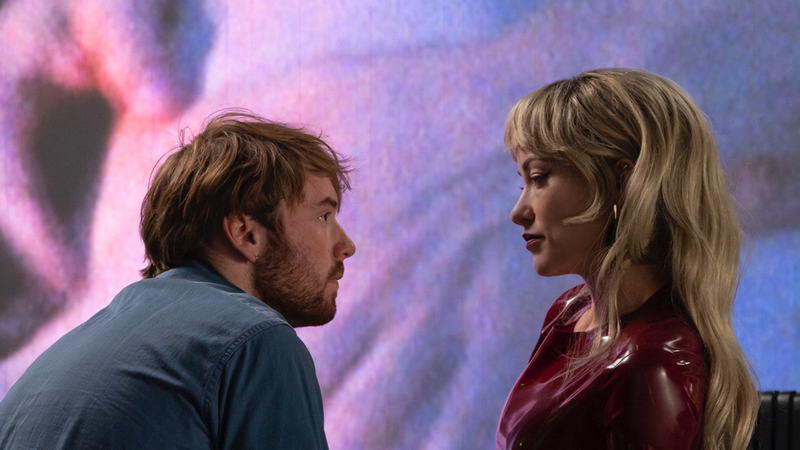 Cooper Hoffman and Olivia Wilde in Gregg Araki's I Want Yor Sex
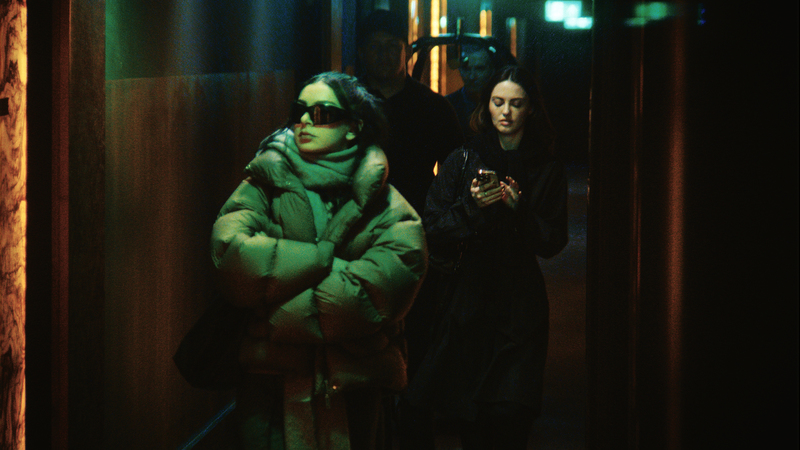
Much attention will be centered around Aidan Zamiri’s A24-backed debut The Moment as the Glaswegian photographer teams up with Charli xcx in what promises to be an autobiographically inspired account of a pop star ahead of her arena tour. The British singer-songwriter will also star in Birds of Prey director Cathy Yan’s The Gallerist, which sets out to bring out the horror of the art world, with a cast led by Natalie Portman and Jenna Ortega.
From a European perspective, it is always interesting to see which Sundance films will soon after travel over the Atlantic for their International premiere at Berlin. As is customary, one of these lands a slot in the Berlinale competition, and after Celine Song’s Past Livesin 2023, Aaron Schimberg’s A Different Man in 2024, and Mary Bronstein’s psychosis-inducing If I Had Legs I’d Kick You last year, Josephine by Beth de Araújo continues this tradition. Since her previous film, Soft & Quiet—which Indiewire’s Kate Erbland called the “most terrifying film” of 2022—polarized audiences far and wide, it will be interesting to see whether the Brazilian-American director, joining forces with Gemma Chan and Channing Tatum, will incite similarly strong reactions.
Among the titles of which little has been revealed so far, though the names attached allow for generous extrapolation, are zi by Kogonada—an offshoot project with long-time collaborator Haley Lu Richardson after last year’s commercial romcom A Big Bold Beautiful Journey not only fell through with critics, but also with audiences (there’s a solid chance that more people saw this one on a plane than in theaters by now). zi, it stands to hope, might bring us back the Kogonada of Columbus (2017) and After Yang (2021). And then there’s cult comedian John Wilson, who, following up on his imaginative HBO show How to with John Wilson, finds himself as participant in a workshop for Hallmark filmmaking. With the formula of the popular genre in mind, he seeks financing for a documentary on concrete. The History of Concrete, Wilson’s debut feature, is executive produced by Marty Supreme director Josh Safdie and Ronald Bronstein, who both were executive producers on A24 acclaimed series The Curse.
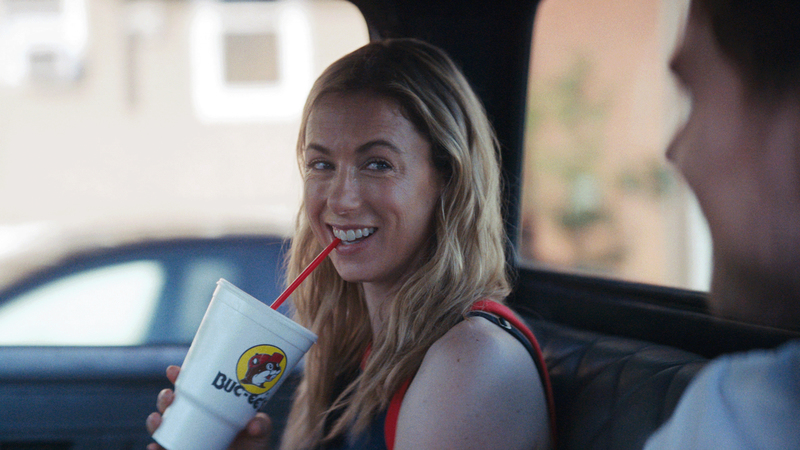
Josephine Decker is another director with longstanding ties to the festival, and her name has been on the critics’ radar ever since Madeline’s Madeline premiered at Sundance in 2018. The fact that her inventive Shirley Jackson biopic Shirley was criminally overlooked may, to some extent, have accounted for diving into more conventional territory. Her subsequent young-adult dramaThe Sky Is Everywhere, released via AppleTV+ in summer 2022, may attest to this development. Chasing Summer, written by stand-up comic Iliza Shlesinger, who also stars in the lead role, is described as a dramedy in which a woman, after her most recent breakup, returns to her hometown.
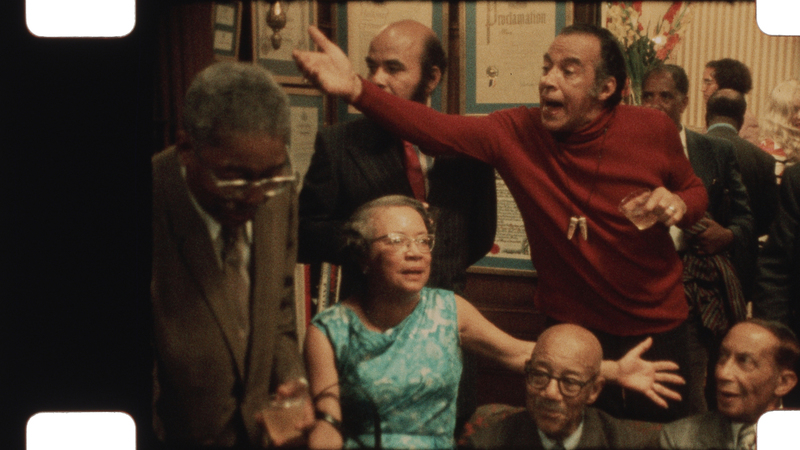
William Greaves’s Once Upon a Time in Harlem, meanwhile, might mark the greatest lineup surprise. Filmed in August 1972, Greaves—known for his mind-bending meta-documentary Symbiopsychotaxiplasm—witnessed the last great gathering of its kind as Duke Ellington invited the last living luminaries of the Harlem Renaissance for a cocktail party. Greaves's son David, who was with William then, supervised the editing and is credited as co-director.
Apart from the movies, Sundance assembles a lot of talent for talks at the Cinema Café and panels. Among the highlights is a live commentary by Richard Linklater of his 2025 period piece Nouvelle Vague. And then there is the Park City Legacy Program, which opens up space to recall the long history of the festival and the small town that, to the ears of film buffs, has grown synonymous with it.
Lida Bach and Patrick Fey will report via reviews and podcast episodes from the goings on as the industry takes its final bow in the Wasatch Mountains of Utah.
Wird geladen...