
×
Erwähnungen
"People carry many hidden layers within themselves" - Interview with Büşra Bülbül on "About the Mother"

Von Lidanoir in "People carry many hidden layers within themselves" - Interview with Büşra Bülbül on "About the Mother"
am Freitag, 19 Juni 2026, 20:31 Uhr
- 0
- 0
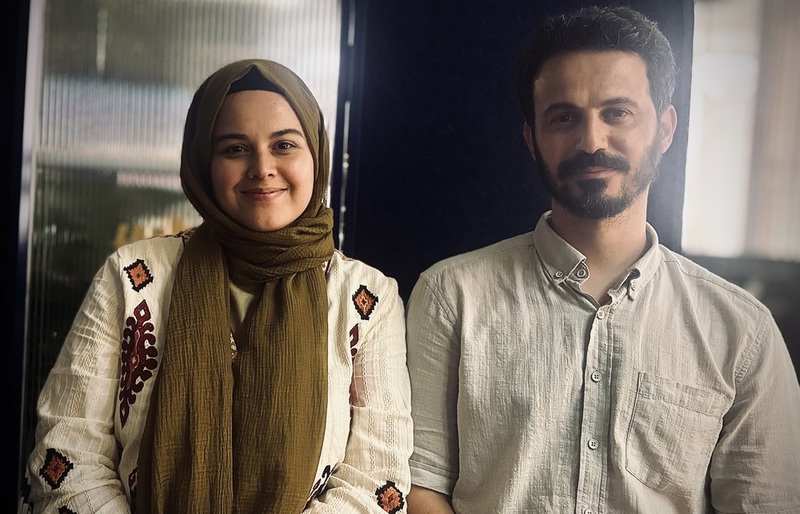 Bildnachweis: © MB
After honing her dramatic skills as a screenwriter for her previous short film projects, Büşra Bülbül now steps behind the camera as director of her first feature. Centering the harsh experiences of a young family mother on the brink of poverty, About the Mother takes the Turkish filmmaker right to the main competition of Shanghai International Film Festival. On site at the festival hub, Bülbül speaks with Lidanoir about the personal inspiration for the main character, working together with her husband Bekir Bülbül, and shining a cinematic light on social marginalization.
Lida Bach: Congratulations on your first feature film. It was selected for the main competition at the Shanghai International Film Festival. How does that feel?
Büşra Bülbül: It is very exciting. I am incredibly happy to be here. Having my first feature selected for such a major festival is a great honor, and sharing the experience with the cast makes it even more special.
LB: You tackle challenging themes such as motherhood and social marginalization. How did the idea for the film and the character of Sibel come to you?
BB: Thank you. The film grew out of my personal experiences. After becoming a mother of two children, many memories from my own childhood resurfaced. I began to reflect on my relationship with my mother and the difficult circumstances she lived through while raising us.
My mother worked while caring for her children, and I witnessed the sacrifices she made. She had to balance work, motherhood, and family responsibilities, often putting her own life aside for others. As I grew older, I came to see her as a woman deserving of great respect. The film emerged from those reflections and emotions.
LB: So the main character is partly inspired by your mother?
BB: Yes. The inspiration comes directly from my childhood experiences. When I was young, I often accompanied my mother to work. There’s even a scene directly referencing this in the film, where we see the older daughter helping her mother sell milk in the streets. That moment is strongly connected to my personal memories. The seeds of the story were planted during my childhood and grew in my mind until I eventually made the film.
LB: The short film Çamaşır Suyu that you shot with you husband in 2020 has similar core themes. Does About the Mother build upon this work?
BB: We definitely see it as an expansion of the Sibel character. In Çamaşır Suyu we see the story of the lower class oppressing an even lower class. I’m addressing the same issues here.
For me, social class problems are topics that will never run out when it comes to making films.
LB: Throughout the film, Sibel struggles within a system that offers her very little support. She lacks social security; while she has a few relatives, they won’t help her, and even at the hospital, she faces difficulties. Is the film also intended as a social critique?
BB: Not primarily. My intention was to tell a story about human relationships rather than create a direct social critique. For example, Sibel’s lack of social security is not because such a system does not exist. The problem is that her husband’s employer fails to provide it. Throughout the film, I wanted to focus more on the actions of individuals and the ways people help or harm one another. This motif, of course, is not specific to Turkey. It could happen anywhere: Germany, China, or any other country. My focus was on human behavior and how it influences our most intimate relationships.
LB: Despite everything she faces, Sibel remains remarkably resilient. She never gives up and continually fights to improve her family’s situation. Was it important for you to portray this kind of everyday female strength, which often gets overlooked?
BB: Yes, absolutely. I wanted to tell a story about motherhood through the figure of a strong woman. Once Sibel becomes a mother, she has no choice but to be strong. She takes care of her children, supports her husband, is a companion to her elderly friend, and even offers to help other relatives. No matter how difficult her life becomes, she keeps going. Showing that perseverance and strength in women on the sidelines of society was very important to me.
LB: Milk is a recurring symbol connected to motherhood and survival throughout the film. What does milk symbolize for you?
BB: For me, milk symbolizes purity. The same is true for water, with which we see her diluting the milk in one scene. The result becomes something impure because the milk is being adulterated. Two things individually pure, when mixed together, can become stained. That contradiction interested me. Sometimes two good or pure things can come together and produce an undesirable result. Sibel finds herself caught between those opposing forces.
LB: Some stylistic elements almost feel like horror, especially in the dream sequences. Is genre cinema an inspiration for you?
BB: Sibel begins having disturbing dreams after she starts compromising her own ethics by mixing water into the milk. So gradually, water becomes a constant presence in her life. It appears everywhere, in her home and outside in the rain. It reflects her growing sense of guilt and this feeling that her soul has become contaminated. The nightmarish scenes are a way of visualizing her inner turmoil and moral conflict.
LB: So do you believe that poverty and hardship can push people morally and mentally to the edge?
BB: Yes, difficult circumstances can lead people astray. Human beings can make mistakes when they are desperate. Sibel finds herself in a very vulnerable position. She wants to survive and support her family, but her situation pushes her toward choices she would not otherwise make. I wanted to explore how desperation can affect someone’s moral judgment.
LB: The lead actress delivers an extraordinary performance. How did you find and cast her?
BB: As I‘m also one of the producers of the film, I had met many actresses during the casting process. When she read the script, she immediately connected with the character because she knew women like Sibel from her own family and neighborhood. She understood the world of the film instinctively, and that connection was very important to me to create authenticity.
LB: You work closely with your husband Bekir Bülbül, who co-wrote the screenplay. What was it like collaborating together on set?
BB: We work together very well. Of course, sometimes we argue at home, but when we arrive on set and focus on our professional roles, everything functions smoothly. We respect each other’s responsibilities and creative decisions.
LB: Do you already have a new project you‘re working on?
BB: I do. It‘s a drama about a man named Bayram who dreams of becoming a famous actor but never achieves success. When one day his mother dies, he discovers that she never had official identification papers, which is not uncommon among the older generation in Turkey. This creates a serious problem because he cannot claim her body from the hospital without an ID. Bayram and his family try to use a neighbor’s identification, but the hospital staff discovers the deception. They then begin searching for relatives and a way to establish an official identity for his deceased mother. The story follows their struggle against bureaucracy.
LB: If audiences take away one thing from the film, what would you hope it would be?
BB: My main message is that the human soul is full of moths. People carry many hidden layers within themselves. I hope the film encourages audiences to reflect on those complexities and contradictions that exist in all of us.
LB: Thank you for the interview, and good luck with the awards!

Wird geladen...
{{ loadError }}