
×
Erwähnungen
Xue Ma: "We need to find a common understanding of what it means to be human, regardless of cultural background or social circumstances"

Von Lidanoir in Interview with Xue Ma on "Aroma"
am Sonntag, 22 November 2026, 12:08 Uhr
- 0
- 0
 Bildnachweis: © MB
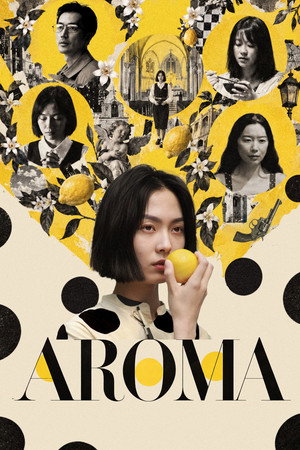
Following White River and Sonata of Wave, Xue Ma explores desire, loneliness and intimacy through the sense of smell in her new work Aroma. At Tallinn Black Nights, where her experimental drama premiered in the Rebels with a Cause Competition, the Chinese filmmaker discusses with Lidanoir the inspiration for her literally sensual story, the importance of female perspectives in A-list festivals, and the lack of proper representation of Asian voices.
Lida Bach: You have your new film Aroma at the Tallinn Black Nights Film Festival. How is your festival experience so far?
Xue Ma: The premiere is tomorrow, so I'm very excited and looking forward to meeting our first audience. Being here at an A-list festival with a world premiere and competing in one of its sections is an important step.
LB: How do you feel about this significant advance in your artistic career?
XM: When I make films, it's because I'm curious about the world and about people. I want to connect with more different individuals. When I first started making films, I didn't expect them to travel so far internationally, so I feel very fortunate. Being here at this festival and having the opportunity to meet its audience is a precious experience. I want to enjoy every moment. This film has brought me here to introduce myself to the world.
LB: Aroma deals with a kind of olfactory obsession, but also with disconnection in modern society: the need for human connection and, at the same time, a certain repulsion towards it. How did you approach this story, and what inspired it?
XM: I have always been interested in the deeper questions of human existence: do we experience life primarily through our consciousness or through our physical bodies? I placed my characters within these conflicts. There are so many people around us who appear perfectly ordinary on the surface. They seem to have no secrets and cannot express their emotional needs, but perhaps internally they are struggling. They may be suffering or harboring private desires that remain hidden from others.
I wanted to explore the inner lives and emotional needs of these people. I don't think the particular desires of my two protagonists are that strange or unusual. On the contrary, I believe all of us have something similar hidden in a corner of our hearts. We all experience these little moments.
LB: Do you also consider the story a comment on modern society?
XM: I think it is primarily about human emotions, loneliness and longing. Feelings such as subconscious desire and the need for intimacy. These are very common human experiences.
LB: Compared with your previous work, Aroma takes a much more experimental approach.
XM: For me, this film is a small step towards experimental filmmaking, and I think it works. While the way the story unfolds towards the end may contain some experimental elements, I didn't set out to establish a particular genre. My creative method may be a little different from that of other filmmakers. Sometimes I have a strong feeling or an idea that suddenly comes to me, perhaps when I wake up in the morning. I decide to follow it and allow my intuition and natural instincts to guide the process.
LB: How much of it was scripted, and how much emerged spontaneously during the creative process?
I didn't develop a conventional, detailed screenplay. I work in a rather particular way. First, I decided on the locations and settings because I believe that physical spaces are closely connected to the inner spaces of human beings. I considered where the story should take place and what could happen in each location. Then I developed separate lists of ideas and stories for the different spaces. I shot the material within these locations and, during the editing process, began to recognize and assemble the individual stories. So in a way, the narrative emerged through editing.
LB: Smell is present in the title and naturally plays a central role in the film. How did you arrive at this idea? Do you approach smell as something literal or more symbolic?
XM: The protagonist’s inability to tolerate her own smell is connected to her personality. I imagined that her inability to tolerate it was an essential part of who she is.
I was interested in exploring how she would feel if she possessed this unusual ability, something that distinguished her from other people, and how it might lead to isolation. At the same time, I also see her as independent because of these particular abilities.
LB: Lemons also have a recurring presence throughout the film. Was that an aesthetic choice or is there a hidden reference behind them?
XM: Lemons have a very pleasant fragrance, and I also love their yellow color. In cinematic images, I'm drawn to strong, bold colors. Yellow felt like the right shade, and lemons are also a rather charming and simple visual element. So I chose them.
LB: Your films so far have consistently focused on female protagonists. What does it mean to bring their particular perspective to the forefront, especially as a female director?
XM: I don’t really approach my work through a particular theoretical framework, like feminism. For me, gender isn't necessarily what determines a character or a story. I could imagine writing the same character as a man. I'm not deliberately choosing female protagonists to make a particular statement. I simply find their characters nuanced and fascinating, and perhaps it feels more familiar to me to describe them. But I don't want the audience to interpret their actions solely through the fact that they are women. The character could just as easily be a man, and the story would still work.
LB: What role does humor play in your work, particularly in Aroma, where comedic elements are subtly woven into the narrative?
XM: The world today is very messy and chaotic, so people need to have fun! Even when a film deals with serious or difficult subjects, I don't think we necessarily need to approach them in an equally heavy way. The subject matter may be dark or even touch upon forbidden topics, but approaching it through a playful perspective can make it easier for audiences to engage with it. It can also prevent them from perceiving difficult situations in an extreme or negative way. Although the story has some darker elements, I want the audience to leave the screening with at least a little hope for the world.
LB: The presence of Asian productions, particularly smaller independent films, at European film festivals has traditionally been relatively limited. Do you feel that these festivals are gradually becoming more open to films that exist outside the mainstream?
XM: It is still very difficult for Asian filmmakers to establish themselves on the international festival stage because there are certain preconceived ideas about Asian people and Asian societies. I want to use my films to challenge these traditional perceptions and break through those limitations. When audiences see Asian characters, they automatically expect stories about family problems and social suffering. I want to move beyond these expectations.
We need to find a common understanding of what it means to be human, regardless of cultural background or social circumstances. Love, fear, desire, and loneliness are universal human emotions. They belong to everyone. First and foremost, I want to explore these subjects. I would like audiences to approach my characters mainly as human beings.
LB: Would you say it is more difficult for you as a female director to gain recognition within the industry and realize your projects?
XM: I think this is still a reality. I'm not sure whether I would call it a problem, but it is certainly a fact. The only way to change this is for more female directors to have the courage to be themselves. We shouldn't feel that, because we are women, we have to please someone or adapt ourselves to certain expectations. I don't want to think in terms of boundaries for female filmmakers. We need to have the confidence to speak out and develop our own cinematic language. I believe the world would benefit from seeing these different voices.
If we simply make conventional films or imitate the work of others in an attempt to be successful students, we may never establish our own position or have the opportunity to be truly recognized. We need to be ourselves and embrace what makes our work distinctive. And I think this applies equally to female and male directors. You have to believe in yourself, develop your own expression and your own language, and keep going.
LB: Do you have any special expectations or hopes for your world premiere tomorrow?
XM: I don't have any specific expectations, but I think the Rebels With A Cause section offers an interesting selection of films. I hope the audience will be open to a wider range of cinematic experiences. They may not necessarily be looking for conventional narrative storytelling, but might instead approach a film through its sensory qualities, emotions and other forms of cinematic expression. Perhaps that will allow them to connect with Aroma more easily. Besides, I'm really looking forward to seeing the other works and discovering how different directors use their own cinematic languages.
LB: Thank you for the interview!
Wird geladen...
{{ loadError }}