
×
Erwähnungen
Emmanuel Marre & Julie Lecoustre: "Terrible things can be embedded in oridnary procedures"

Von Lidanoir in Interview with Emmanuel Marre and Julie Lecoustre on "A Man of His Time"
am Dienstag, 13 Oktober 2026, 19:08 Uhr
- 0
- 0
 Bildnachweis: © BIFF 2026
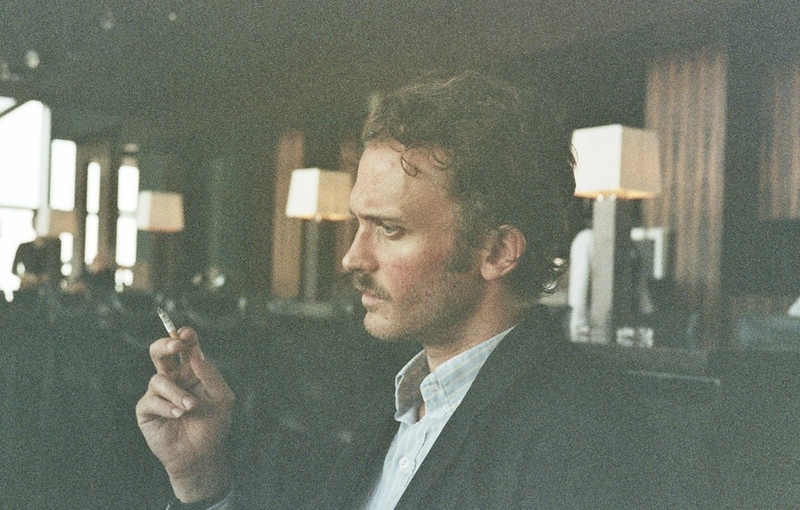
A Best Screenplay Award at Cannes, where A Man of His Time premiered in Competition, is only one of the many honors received by Emmanuel Marre and screenwriter Julie Lecoustre. For director and co-screenwriter Marre, this piece of history is in part that of his own family. Personal letters and archival accounts by his great-grandfather Henri Marre inspired the sardonic story of an ambitious civil servant climbing the ranks of the Vichy regime, deserting any remaining moral misgivings on the way up. At the Busan International Film Festival their darkly humorous historical biopic screens in the Flash Forward section for non-Asian original works, while Marre and Lecoustre found some time for an interview.
Lida Bach: What inspired you to tell this story connecting your family history in regard to your grandfather to broader politics?
Emmanuel Marre: I think many people in France have an ancestor like this, someone who participated in the Vichy regime. I was aware of this man in my family from childhood, but never really knew what he had done. I only knew he had written a book called Our Salvation, shortly after France lost to Germany, and this always intrigued me.
Twelve years ago, one of my aunts showed me a box containing 300 letters written by my great-grandparents. Reading them gave me the striking sensation that I could see and feel history through the eyes of ordinary people.
We tend to forget that people pass through history without knowing how it will end. We judge their choices as though they had a clear understanding of what was happening. This became the core of the film. The letters also allowed me to examine fascism through second-rate civil servants and their daily routines.
Lida Bach: Was there a particular letter that struck you most?
Emmanuel Marre: One letter describes Henri’s arrival in Vichy on September 8, 1940. He writes to his wife about every detail: the weather, where he has a coffee, and how he walks through the corridors of the buildings where the ministries are located. What fascinated me was that he had already divided the letter into theatrical acts. At the end, he writes, “Dear little lady, the movie is over for today.”
He represents his own life as a movie, as though already constructing a story about himself. This inspired the character’s relationship with his own image. It also led to the scene in which someone reads his future in his palm. I imagined that the lines would reveal he would simply have a very ordinary life.
Lida Bach: How did you construct Henri as a character, knowing what he eventually became involved in?
Emmanuel Marre: It was both difficult and relatively easy because the letters provided a framework. We knew, for example, that he became involved in the machinery of Jewish deportation. The question was how an ordinary man came to participate in it.
Julie Lecoustre and I wrote a script primarily to secure financing, but then we reinterpreted and improvised almost everything during filming. Once I said “action,” the actors had considerable freedom.
Lida Bach: Why did you choose a contemporary style of dialogue?
Emmanuel Marre: There are many clichés about how people spoke in the 1940s. When I listened to recordings of meetings in the archives, I realized that the actual language was very different from what we usually hear in period films. We decided to let the actors speak naturally, while establishing certain boundaries to avoid deliberately provocative anachronisms. My main objective was for the film to transcend its historical setting without losing its historical specificity.
Lida Bach: Henri is also manipulative and an unreliable narrator. Did you discover in his letters contradictions between his account of himself and what he actually did?
Emmanuel Marre: Absolutely. Even within the correspondence, he would make a strong claim in one letter and then do the exact opposite two letters later. Our archival research also revealed that what he told his wife sometimes differed considerably from what was actually happening.
Letters read in voice-over are often used to reinforce what a film is telling us. We used them in the opposite way.
Lida Bach: You portray bureaucracy as absurd and rather funny…
Emmanuel Marre: Bureaucracy is often represented as dull, but that is another cliché. When we discussed the film with Julie and the crew, I mentioned The Office as an example of absurdist humor within bureaucratic structures.
There was an administration in Vichy called the Administration for Jewish Questions. When I opened one of its files, the first fifteen or twenty pages contained no mention of Jews at all. They dealt with lunch allowances and travel expenses, banal matters. I found myself enjoying the documents, and then I felt deeply uncomfortable about that enjoyment. That uncomfortable laughter became a guiding principle for the film. Terrible things can be embedded in very ordinary procedures.
Lida Bach: How did you work with Swann Arlaud on his character, and establish the film’s balance between humor and gravity?
Emmanuel Marre: Before shooting, we rehearsed a scene in which the characters had to present their offices to Vichy television. It was a useful exercise because it helped the actors enter the improvisational process.
The rehearsal also helped us develop the visual approach. We had only two people operating the camera, no additional lighting, and a zoom. That created a sense of accident and immediacy.
Lida Bach: Why did you choose popular songs for the striking humorous soundtrack and how did you pick them?
Emmanuel Marre: The deliberate anachronisms help suggest that what happens in this story could also happen elsewhere at another time. I also wanted to use hit songs that people recognize immediately. I often find the music in period films creates distance. I wanted music that would make the audience feel closer to the people on screen, even when their actions are disturbing.
Lida Bach: How did you approach Henri’s moral ambiguity?
Emmanuel Marre: Our starting point was empathy, which is very different from sympathy. Empathy means trying to occupy the position of the person we’re filming without beginning with a moral or emotional judgment. It doesn’t mean approving of what that person does. We wanted to understand the banality of his actions and feelings.
Julie Lecoustre: On set, we also needed to give ourselves possibilities for the editing. With our editor, Nicola Rumpel, we could explore different versions of the character and find the right path toward empathy. We sometimes filmed the same scene with different emotional approaches. The aim was to find the ordinary person behind his actions.
Lida Bach: Many people in France, Germany and other European countries like to believe their grandparents or great-grandparents were in the Resistance, although the historical figures suggest that this was true of only a tiny fracture. How did your family react to your discoveries, and how has the public responded to the film?
Emmanuel Marre: In my family, it was never entirely taboo that my ancestor had served the Vichy regime, but there was a kind of comfortable silence around it. One of his sons, my grandfather, would say that he was simply an idealistic man who had ruined his career. Nobody really questioned what he had done within the administration.
I never felt personal guilt or shame about him. But discovering the precise nature of his work was a shock. At the same time, understanding what had happened made me feel stronger, particularly when thinking about the state of democracy today.
One of the German actors in the film works in transport for the European Union. After the film, he searched a German database to find out whether he had an ancestor who had been involved in the regime. Of course, he did. He told me that he felt better somehow after discovering the truth. The weight of those family histories can be enormous, especially when people expend so much energy trying not to look at them.
Lida Bach: Has making this film changed how you understand what it means to be a collaborator?
Emmanuel Marre: The term itself is problematic because it can diminish responsibility. In the film, Henri becomes a collaborator only after about an hour and fifteen minutes. We tend to look back at history as though everyone belonged to one of two coherent categories: the good side or the bad side. What matters is what people do and how they respond to particular situations.
The important question is how we try to behave according to our values. Even members of the Resistance were not necessarily certain that they were doing everything right. I find those people particularly important: people who are unsure of themselves but nevertheless try to act well.
Lida Bach: So the people who occupy the uncertain middle ground may have the greatest responsibility?
Emmanuel Marre: Exactly. They are often the least celebrated, yet they may be the ones who bear the greatest responsibility. The ability to question yourself and refuse to follow a process automatically can be decisive.
Lida Bach: Did you recognize aspects of your own personality in Henri?
Emmanuel Marre: Many things. I’m someone who has difficulty saying no when I disagree with something. I tend to say, “Let me think about it. I’ll give you an answer later.” I began asking myself whether that was a form of cowardice and what I should do about it.
I also became more aware of the desire to be seen. That need for recognition can lead people toward very tragic decisions.
Lida Bach: Your Nazis and collaborators look quite ordinary, even awkward. They’re not portrayed as the evil geniuses we often see in films.
Emmanuel Marre: We found images taken after the war during trials of collaborators. One showed a few men from the Wehrmacht sitting at a table in a garden. They had brought bottles and a pie outside and carried chairs from the living room into the garden. Some of them appeared half-drunk.
I was struck by how different it was from the familiar representation of the Nazis as perfectly dressed, powerful figures who occupied beautiful hotels and always appeared organized and imposing. We recreated that atmosphere because it challenged the visual mythology surrounding the regime.
Lida Bach: Did you also want to draw parallels with contemporary extremists, including the far right, whose members can appear respectable rather than resembling the stereotypical Neo-Nazi?
Emmanuel Marre: Yes. The parallels were sometimes so obvious that we actually reduced some of them in the film. The fundamental issue is how these movements understand human beings and human organization. They reject the idea that all human beings are equal in value. This has concrete consequences. At the beginning of the film, for example, there is a notice stating that certain civil servants will not be hired because of their ancestry. Under Vichy, civil servants with a Jewish parent could be excluded even if they had previously been considered French.
We also see Henri preparing a report on education, drawing on material from the historical book. He argues that students are not equal in value and that opportunities should be distributed according to their supposed worth.
I think this belief in unequal human value lies at the heart of contemporary authoritarianism. If you believe that some people are inherently superior, you can convince yourself that you deserve what you have and that those who have less are simply less worthy.
Lida Bach: What do you think is the antidote to such conceptions?
Emmanuel Marre: I think it requires defending another of understanding life and what it means to succeed.
The pandemic also made this contradiction visible. People who supported others and performed essential work were not necessarily rewarded. We need to reconsider what we value and what we consider a good life.
Lida Bach: Do you think that people will actually recognize their own fascist views within the film’s characters? Since there seems to be a rising disassociation of political views, where even those committing the most horrible acts and cherishing the most reactionary believes label the left wing and democrats as “nazis” and “oppressors”.
Emmanuel Marre: That is one of the risks of the film. We decided to show that fascists are human beings, not monsters. But someone who doesn’t want to confront what is happening might conclude that they’re simply ordinary people caught up in bureaucracy and that there is nothing particularly troubling about them.
Nevertheless, I believe the opposite approach would be ineffective. I wanted the film to create uncertainty and encourage people to question their own assumptions.
Lida Bach: This year’s French cinema has seen several films about the Second World War and its heroes and villains. Moulin, De Gaulle. Do you think filmmakers return to this period in resp to the current political climate?
Emmanuel Marre: I don’t have a definitive answer. Since the pandemic, the distinction between good and bad has seemed less clear to many people. The Second World War remains central to French historical consciousness because it was the last time so many people faced a situation in which choosing a position was unavoidable and the consequences were profound.
We tried to emphasize this uncertainty in the film. People who resisted were not necessarily described as members of the Resistance; they could be called terrorists. The meaning of things can be reversed repeatedly until it becomes difficult to know where you stand.
Lida Bach: The film has a dynamic editing style and visual language that sometimes resembles a music video. Why did you avoid the classical aesthetic of the historical drama?
Emmanuel Marre: I wanted to unlock what I call the emotional seat belt. In classical historical films, a certain seriousness can create the feeling that there is a museum window between the audience and what appears on screen. We look at history as something safely contained in the past. Our choices were intended to create a more immediate emotional connection.
The approach is also a way of questioning evil aesthetically. I have a problem with the fascination that evil can inspire, especially when it becomes an aesthetic fascination.
Lida Bach: That seems particularly relevant to Nazism, which has developed arguably the most recognizable and influential visual aesthetics connected to politics in modern history.
Emmanuel Marre: Absolutely. There is an entire aesthetic cult around Nazi emblems, uniforms and spectacle. We often see images of enormous, perfectly organized rallies, with torches and choreographed formations. But when people examined actual recordings from the period, they discovered that events were much less organized and fewer people were present than iconic images suggest. If we become fascinated by that representation of an overwhelming power, we risk being drawn into the very mythology we should be questioning.
Lida Bach: Among all the letters you discovered, is there one that remains especially important to you personally?
Emmanuel Marre: The letter I used for the breakup between Henri and Paulette is particularly important. Paulette writes an extraordinary sentence: “I sacrificed to you all my dreams, all my chimeras, but you sacrificed me to all of yours.”
It expresses something essential about the film. Paulette has her own dreams and is also caught within a bourgeois world of expectations and constraints. The question of responsibility operates also within intimate relationships.
Lida Bach: How do you understand your role as a filmmaker within today’s political charged and decisive climate?
Emmanuel Marre: I don’t see the film as a remedy. During the shoot, however, created a space in which we could think about political events without being entirely absorbed by them.
I believe aesthetics are closely connected to ethics. That doesn’t mean every aesthetic choice has to be explicitly political, but there is always an ethical dimension to the way we represent the world.
I often think about Picasso and Matisse, two of the most important painters during the Second World War in France. Picasso painted Guernica, while Matisse painted magnificent interiors filled with beautiful flowers. I’m not sure which of them helped humanity more.
Art can confront us with political reality, but it can also offer other ways of seeing and experiencing the world. What matters is that we remain attentive to the impact of our choices mean, both aesthetically and ethically.

Wird geladen...
{{ loadError }}