Nine years ago, an international events organizer, CEO, and former top athlete met a famous Egyptian actress who told him of an ambitious idea: found a film festival in the middle of the desert, just an hour from Hurghada, the country’s second-biggest and busiest airport, gateway to the scenic Red Sea resort strip. Thanks to funding from a cinephile business mogul, El Gouna Film Festival was born in 2017 as a place where cinema is celebrated and created. Few festivals share an origin story as beautiful as that of Amr Mansi and Boushra Rozza of Gouna Film Festival or GFF, as it is shortened on the festival announcements all over the picture-perfect town where that story actually began decades earlier.
Samih Sawiris, brother of said cinephile businessman Naguib Sawiris of the multinational construction conglomerate Orascom Group, began developing El Gouna in 1989. A stretch of desert coast, strategically located north of Hurghada with its, back then, insignificant airport, was turned into a privately planned resort town. If you erect a small city adorned with lagoons, luxury hotels, and leisure facilities in the middle of the desert, you’re not just rich – you have an amount of wealth and power that ordinary people can’t fathom and that arguably no one should have at all. But reality is no movie, even if it sometimes plays out like one. Therefore, that year-round flagship with its homes and holiday sites became an official model of integrated tourism development.
Art, Artifice, and Advertising
Those who are not part of the predominantly white, wealthy, Western vacationers populating this surreal scenic spot, which seems eerily quiet even at its busiest, might ask whom this private elite enclave serves, whom it welcomes, and at what environmental cost. The latter should be significant, given that GFF prefers to fly its guests in and out on so-called partner (= sponsor) airlines, even if it means sending them on lengthy multi-stop odysseys rather than on direct flights. But that odd underclass individual who might end up in this world of wealth, populated almost entirely by either tourists or service personnel, will have enough to worry about regarding how to get out of there.
After all, getting that supposedly guaranteed flight to the next destination promised to festival invitees turns out to be a matter of enormous personal effort and, at some point, sheer luck. The abstract aura of art and artificiality works also as branding or real estate, advertising authenticity with a cultural platform primarily designed to strengthen the region’s image. Whether it benefits filmmakers and audiences beyond El Gouna is a test the “Cinema for Humanity” theme now invites. After “9 Years of Stories", as the banner of the current edition, running from 15th to 23rd October, pronounces its readiness to expand, according to its tagline, “From the Red Sea Shores to the International Film Map".
Reliable Re-watches
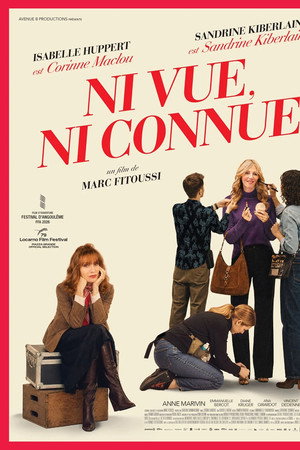
The first edition under the artistic leadership of newly appointed artistic director Andrew Mohsen hosts an extensive agenda of panels, talks, pitching sessions, and of course, films. Marc Fitoussi's Locarno vehicle for Isabelle Huppert, All About Corinne, establishes itself as something of a favourite festival intro, opening El Gouna just after Busan International Film Festival. Heavyweights from the global circuit are Ryusuke Hamaguchi's All of a Sudden, Paweł Pawlikowski's Fatherland, and İlker Çatak's Golden Bear winner Yellow Letters. Among the nine feature competition films are Joaquin del Paso’s The Garden We Dreamed, Lili Horvát’sMy Notes on Mars, and Mohammed Hammad's Safe Exit. With eleven contenders, the documentary competition is equally high in quality and low on world premieres.
Favourites include Poh Si Teng’s harrowing tribute to Gaza medics, American Doctor, Muhammad Mustapha’s bodybuilder portrait Big Boys Don't Cry and Irene Bartolomé’s melancholic ode to Beirut, Dream of Another Summer. Given the selection’s reliance on established festival fare, the overarching themes of displacement, war, lingering memory, and social inequality seem a given. Programmes backing these focal points are a promising addition: Safe Harbour MENA supports filmmakers who are displaced or threatened, and the new CineGouna Series builds a pipeline for Arab television. Mona Zaki receives a Career Achievement Award; Moroccan director Faouzi Bensaïdi, whose debut A Thousand Months won at Cannes' Un Certain Regard, takes the second. Egyptian screen icon Yousra fronted the festival's campaign.
Organizers seem now to be pushing the nine-day event toward a year-round activity, as a lasting cultural and industry institution. While it does show a new confidence about its Arab identity and industry role, only time will tell if cinema is wholly surpassed by commercial calculations. At least the tickets are surprisingly affordable, even for locals, but for the time being, that doesn’t seem incentive enough to properly fill the theatres with their manufactured mix of prominent prestige titles and regional voices. You can design a whole town and build your own festival event, but an audience is still something naturally grown.

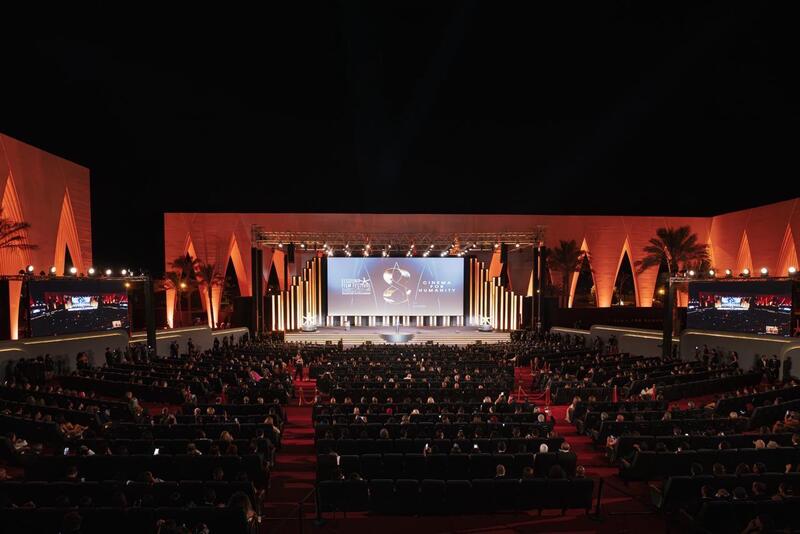 Bildnachweis: © GFF 2026